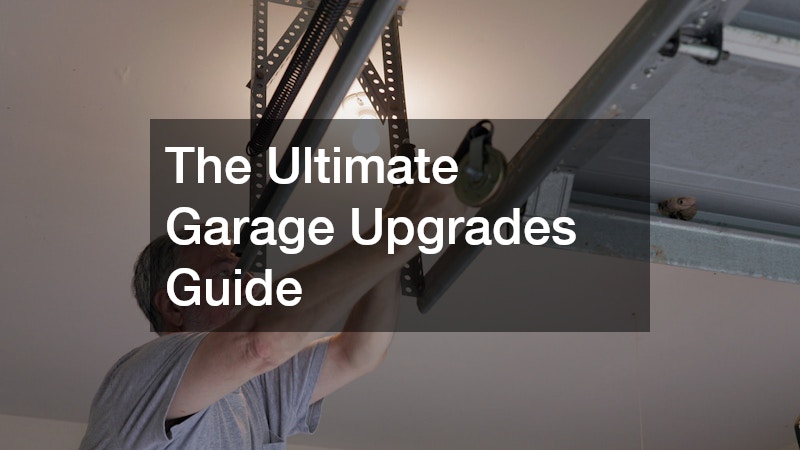
For decades, the standard residential property has treated its largest continuous square footage as an afterthought. It becomes the default dumping ground for half-empty paint cans, holiday decorations, discarded fitness equipment, and cardboard boxes that never quite made it to the recycling bin. In many households, this space is barely functional enough to park a vehicle, let alone serve as an inspiring or efficient part of the home.
However, a paradigm shift is occurring in modern homeownership. People are realizing that this massive, underutilized footprint holds the key to unlocking extraordinary potential. Whether you dream of a pristine showroom for your vehicles, a heavy-duty workshop for weekend projects, a high-intensity home gym, or simply an immaculately organized storage haven, a comprehensive transformation is entirely within your reach.
Approaching a project of this magnitude requires more than just buying a few plastic bins or slapping a coat of paint on the walls. It demands a holistic, 360-degree strategy that addresses structural integrity, exterior curb appeal, advanced mechanical technology, and intelligent interior design. This guide is built to walk you through every critical phase of the renovation process. By breaking down the complex moving parts into manageable, actionable steps, you will learn how to conceptualize, plan, and execute a flawless upgrade. Prepare to reclaim your square footage and elevate your property’s value, functionality, and aesthetic appeal from the inside out.
Blueprinting Your Space and Structural Planning

Before you purchase materials or swing a hammer, the most crucial phase of any successful renovation is the blueprinting stage. Without a solid plan, you risk creating a space that looks better but functions poorly.
Define the Primary Function and Zones of Your Renovated Space
The first step is establishing absolute clarity on what you want to achieve. Treating the area as a multi-purpose room is fine, but it requires strict “zoning” to prevent functional overlap that leads to clutter.
-
The Vehicle Zone: Measure your vehicles with the doors fully open. Ensure you have at least 36 inches of clearance around the perimeter of the car to walk comfortably without brushing against dirty bumpers.
-
The Workshop Zone: If you plan to build out a workbench, position it near existing electrical outlets and natural light sources. You will also want this zone away from where vehicle exhaust is most heavily concentrated.
-
The Storage Zone: Keep deep storage (items accessed once a year) relegated to high overhead spaces, while active storage (sports equipment, gardening tools) should be easily accessible near the entry doors.
Draft a physical floor plan on graph paper. By mathematically plotting out these zones, you avoid the common pitfall of buying cabinetry or workbenches that impede vehicle access.
Vet Professionals Thoroughly for Major Structural Expansions
Sometimes, maximizing your space means expanding it. If your vision includes knocking down interior walls to widen the footprint, raising the roofline to accommodate an automotive lift, or adding an extension to the side of the property, you are stepping into serious structural territory. These are not weekend do-it-yourself projects.
When you are fundamentally altering the framing, load-bearing capacities, or foundation of your property, you must bring in highly qualified garage builders to ensure the structural integrity of your home is not compromised. When evaluating these contractors, request to see their portfolio of similar structural expansions. Ask for proof of up-to-date liability insurance, a clear explanation of how they handle local municipal permitting, and a detailed project timeline.
Source High-Quality Materials by Comparing Vendor Warranties
The materials you select for your infrastructure will dictate how long your renovation lasts before needing maintenance. This is especially true for the massive, moving exterior wall that protects your assets. When sourcing materials for this component, do not accept the first estimate you receive.
Instead, reach out to multiple local garage door companies and request detailed, itemized quotes. What you are looking for here is not just the lowest price, but the best long-term value. Compare the manufacturer warranties on the panels, the lifespan guarantees on the mechanical hardware, and the labor warranties offered by the vendors. A slightly higher upfront investment with a vendor that provides a robust 10-year warranty is mathematically superior to a bargain basement price with zero post-installation support.
Elevating Curb Appeal and Property Value

Upgrading the exterior facade is one of the most effective ways to boost your home’s visual impact. This massive architectural element often accounts for up to a third of the front-facing view of your property, making its aesthetic crucial.
Select Facade Materials That Match Your Local Climate and Architecture
Choosing the right material is a delicate balance between the architectural style of your home and the harsh realities of your local climate. A visually stunning material that rots or rusts in two years is a poor investment.
-
Steel: Excellent for durability and security. Modern steel can be stamped with beautiful wood-grain textures, making it highly versatile for contemporary or traditional homes.
-
Aluminum and Glass: Perfect for ultra-modern or industrial aesthetics. They allow maximum natural light into the space and are highly resistant to rust, though they offer poor insulation.
-
Wood: Nothing quite matches the timeless, authentic curb appeal of a real wood garage door, which beautifully complements Craftsman, Tudor, or rustic architectural styles. However, this material requires a strict maintenance schedule. To prevent moisture damage, warping, and sun bleaching, you must be prepared to strip, sand, and reapply marine-grade sealants or UV-resistant stains every few years depending on your climate’s humidity levels.
Time Your Exterior Upgrade for Maximum Return on Investment
Home renovations are not just about personal enjoyment; they are strategic financial investments into your property’s equity. If you are considering selling your home in the near future, timing your exterior upgrades can yield massive dividends.
According to annual national remodeling cost-versus-value reports, exterior facade improvements routinely offer the highest return on investment of any home project. Upgrading to high-quality, aesthetically pleasing new garage doors just before listing your property can recoup up to 90% to 100% of the project’s cost at resale. Buyers make snap judgments based on curb appeal within the first ten seconds of pulling into the driveway. A clean, modern, and sturdy exterior signals to prospective buyers that the entire property has been meticulously maintained, often resulting in faster sales and higher closing offers.
Modernizing Access with Smart Tech and Hardware

The physical barrier to your space is only as good as the mechanics that move it. Upgrading your access technology improves daily convenience, enhances security, and drastically reduces noise pollution in your home.
Prepare the Workspace for a Safe and Seamless Setup
Before you can enjoy the benefits of upgraded technology, you must ensure the physical environment is prepped for the labor required. If you are having heavy, tension-loaded mechanics installed, the workspace must be absolutely clear.
-
Clear the Floor: Remove all vehicles, bicycles, and floor clutter at least 10 to 12 feet back from the entrance. Technicians need ample room to maneuver ladders and long tracks safely.
-
Electrical Readiness: Verify that the ceiling outlets near the motor location are grounded and up to code. Running extension cords across the ceiling is a severe fire hazard and violates building codes.
-
Lighting: Ensure the space is well-lit so technicians can see the fine details of the hardware they are assembling.
Properly prepping this space minimizes the time technicians spend navigating obstacles and ensures a smoother, safer garage door installation from start to finish.
Integrate Smart Technology for Remote Monitoring and Silent Operation
The days of loudly rattling, chain-driven motors waking up the entire house are over. Today’s hardware is designed for silent operation and seamless integration with your smart home ecosystem.
When evaluating your options, prioritize belt-drive or direct-drive garage door openers over the traditional chain models. Belt drives use steel-reinforced rubber belts that eliminate the metal-on-metal clanking, making them ideal if you have a bedroom located directly above the space. Furthermore, modern motors come equipped with Wi-Fi connectivity. This smart integration allows you to monitor the open/close status from your smartphone, grant temporary digital access to delivery drivers or pet sitters, and set automated schedules so the system locks itself every night at a specific time. Always look for a model that includes a built-in battery backup, ensuring you are never locked out during a neighborhood power outage.
Navigating Wear, Tear, and Professional Upkeep

Even the most premium materials and advanced motors are subjected to immense stress. The average system opens and closes over a thousand times a year, lifting hundreds of pounds each time. Proactive upkeep is non-negotiable.
Establish a Bi-Annual Lubrication and Safety Inspection Routine
Preventative maintenance is the secret to extending the lifespan of your mechanical components. You should perform a basic tune-up and inspection twice a year—once in the spring and once in the fall before extreme weather hits.
-
Lubrication: Avoid standard degreasers (like WD-40), which can strip away necessary lubricants and attract dust. Instead, apply a high-quality white lithium grease or a silicone-based spray to the hinges, metal rollers, and bearing plates.
-
Visual Inspection: Check the weatherstripping at the bottom for cracks, inspect the metal tracks for dents, and ensure all bolts and fasteners are tight.
-
Professional Balancing: Over time, the heavy vibration can cause the entire system to fall out of alignment. Once a year, you should hire professional garage door services to perform a comprehensive balance test. These technicians will measure the torque, adjust the lifting cables, and ensure the tracks are perfectly parallel, preventing the motor from overworking and burning out prematurely.
Know the Financial Tipping Point: When to Scrap vs. Salvage
As a homeowner, you will eventually face a scenario where a component breaks down, and you must decide whether to patch the problem or start fresh. Making the wrong choice can lead to a money pit of endless service calls.
A reliable metric to use is the “50% Rule.” If your system is over ten years old, lacks modern safety features, and has severely rusted tracks or rotting panels, do not throw money at temporary fixes. Add up the estimated cost of patching the individual problems. If that total exceeds 50% of the cost of a complete garage door replacement, it is far more economical in the long run to tear out the old system entirely. Investing in a brand-new, warranted setup will save you from the stress of recurring breakdowns and compounding invoices.
Tackling Common Mechanical Failures Safely

When things go wrong, knowing what you can fix yourself and what you absolutely must leave to the experts can save you thousands of dollars—and potentially save your life.
Identify the Warning Signs of High-Tension Component Failure
The muscle of your lifting system is not the electric motor on the ceiling; it is the heavy-duty coiled steel mounted above the entrance. These coils hold an incredible amount of kinetic energy. When they reach the end of their lifecycle, they fail dramatically.
You might hear a sound similar to a gunshot or a loud firecracker originating from the space, or you may suddenly find that you cannot physically lift the barrier off the ground manually. These are classic indicators that the tension system has snapped. Under no circumstances should an untrained homeowner attempt DIY garage door spring repair. The metal coils are wound incredibly tight, and if the specialized winding bars slip during adjustment, the sudden release of tension can shatter bones, cause amputations, or result in fatal injuries. Immediately unplug the motor to prevent it from trying to lift dead weight and call a licensed, bonded technician.
Troubleshoot Sensor Alignments Before Calling for Professional Help
Not every malfunction requires an emergency technician visit. Often, what appears to be a major mechanical failure is actually a minor, easily fixable safety feature triggering a false alarm.
If your system opens perfectly but refuses to close—often accompanied by a clicking sound or blinking lights on the motor—the culprit is usually the photo-eye safety sensors located near the floor. Before paying for expensive garage door repairs, check these sensors. Ensure that no rakes, trash cans, or cobwebs are blocking the invisible beam. Wipe the sensor lenses gently with a clean microfiber cloth. Check that the small LED indicator lights on both sensors are glowing solidly; if one is flickering, the sensors are misaligned. Simply loosen the wingnut, pivot the sensor until the light goes solid, and tighten it back up. This five-minute troubleshooting trick resolves the majority of closing issues.
Optimizing the Interior: Flooring, Storage, and Climate
With the structural elements, exterior aesthetics, and mechanical access secured, the final phase of the ultimate upgrade is tackling the interior. This is where you transform a cold, dusty box into a pristine, functional, and comfortable extension of your living space.
Upgrade to Polyaspartic or Epoxy Flooring for Ultimate Durability
The foundation of a beautiful interior is the floor. Bare concrete is highly porous; it absorbs motor oil, antifreeze, and muddy water, leaving permanent, ugly stains. It also constantly generates a fine, irritating dust as the surface breaks down over time.
Upgrading your flooring is a game-changer. The two most popular and durable options are epoxy and polyaspartic coatings.
-
The Preparation: The secret to a coating that lasts decades without peeling is the prep work. The concrete must be mechanically ground with a diamond grinder or chemically etched to open the pores, allowing the base coat to penetrate and bond deeply.
-
Epoxy: A fantastic, cost-effective option for DIYers. It provides a thick, resilient layer that resists impacts and chemical spills. However, it takes several days to fully cure and can yellow over time if exposed to direct UV sunlight.
-
Polyaspartic: The premium choice. It is highly flexible, UV resistant (meaning it won’t fade or yellow), and cures so rapidly that a professional team can often complete the installation in a single day.
Both options allow you to broadcast decorative vinyl flakes into the wet coating, providing a stunning granite-like appearance and essential anti-slip texture for wet days.
Implement Vertical and Overhead Storage to Reclaim Floor Space
Clutter is the enemy of a functional space. If everything you own is stacked in plastic bins on the ground, you have failed to utilize the most valuable real estate available: your walls and ceilings. A smart storage strategy moves everything up and out of the way.
-
Overhead Ceiling Racks: Above the tracks of your motor, there is often massive unused volume. Install heavy-duty, steel ceiling racks suspended from the ceiling joists. This is the perfect location for bulky, lightweight items that you only need seasonally, such as artificial Christmas trees, camping sleeping bags, or summer patio cushions.
-
Slatwall Panel Systems: Avoid flimsy pegboards that warp and tear. Instead, line your primary walls with PVC slatwall panels. These systems are incredibly strong and fully modular. You can snap in hooks, baskets, and shelves, allowing you to hang heavy steel tools, hoses, and bicycles vertically. If you buy a new tool, you simply rearrange the hooks rather than drilling new holes in your drywall.
-
Heavy-Duty Cabinetry: For hazardous materials like paint thinners, automotive fluids, and sharp power tools, enclosed, lockable metal cabinetry is essential. Floating cabinets (mounted to the wall, hovering above the ground) are ideal because they protect your gear from accidental flooding or floor spills and make sweeping underneath a breeze.
Manage the Climate with Insulation and Conditioned Air
If you plan to use this space as a home gym, a woodworking shop, or a year-round laundry area, you must address climate control. An uninsulated box will be an oven in July and a freezer in January.
-
Wall and Ceiling Insulation: If your walls are unfinished with exposed studs, install fiberglass batt insulation or closed-cell spray foam. Do not forget the ceiling; massive amounts of heat transfer occur through the attic space above.
-
Panel Insulation: The massive entryway is the biggest source of temperature loss. Ensure you purchased insulated panels with a high R-value (a measure of thermal resistance). A polyurethane-injected panel provides incredible thermal efficiency and also acts as a sound barrier.
-
Heating and Cooling: Once the envelope is sealed and insulated, you can efficiently control the temperature. A ductless mini-split system is the gold standard here. These units require no ductwork, operate incredibly quietly, and provide both air conditioning and heating, allowing you to use your new workspace comfortably 365 days a year.
Enhance Visibility with LED Task and Ambient Lighting
The final touch that makes a space truly usable is professional-grade lighting. The single, flickering incandescent bulb in the center of the ceiling is wholly inadequate for a functional room.
Replace ancient fixtures with modern LED technology. LEDs draw a fraction of the electricity, last for decades, and operate perfectly in extreme cold.
-
Ambient Lighting: Install linkable, 4-foot LED shop lights in parallel rows across the ceiling. Aim for a daylight color temperature (around 5000K) to provide a bright, energetic, and clean light that mimics natural sunshine.
-
Task Lighting: Over your workbenches or detailing stations, install focused task lighting to eliminate shadows. Articulating arm lamps or under-cabinet LED strips ensure you can see every detail of the projects you are working on.
By layering ambient and task lighting, you create an environment that feels welcoming and safe, rather than dark and imposing.
Conclusion
Transforming your garage from a cluttered, dark storage unit into a premium, highly functional space is one of the most rewarding upgrades a homeowner can undertake. By meticulously planning the structural layout and selecting durable, beautiful exterior materials, you instantly elevate your home’s curb appeal and equity. Pairing those aesthetics with intelligent, whisper-quiet technology and a rigorous maintenance schedule ensures your investment will operate flawlessly for years to come.
When you finally optimize the interior—swapping dusty concrete for sleek coatings, utilizing vertical storage solutions, and dialing in the climate control—you don’t just gain a better place to park your car. You gain an entirely new, livable wing of your home. Take the first step this weekend. Sketch out your ideal floor plan, inventory your clutter, or start researching modern hardware. The ultimate transformation awaits, and your newly upgraded space is ready to be realized.
About the Author