
A home is a collection of systems that quietly wear down season after season, and the homeowners who stay ahead of that wear are the ones who avoid the five-figure emergency repairs. Skipping a seasonal checklist does not save money, it just delays the bill and usually makes it bigger. This guide breaks down the exact tasks worth doing each season, room by room and system by system, so you can catch small problems before they become expensive ones. Think of it less as chores and more as an insurance policy you fund with a few hours instead of a few thousand dollars.

Spring Lawn and Landscape Wake-Up Tasks
Spring is when your yard either bounces back strong or starts a slow decline that gets harder to reverse as summer heat sets in. Raking up matted leaves, aerating compacted soil, and applying the first round of fertilizer gives grass roots room to breathe and take up nutrients before the growing season ramps up. Many homeowners underestimate how much a consistent lawn maintenance routine early in the season affects water usage and weed pressure for the rest of the year. Skipping this step often means paying more later for reseeding, weed treatments, or full landscape renovations.
- Rake up debris and dead thatch before it smothers new growth
- Aerate compacted soil to improve water and nutrient absorption
- Apply pre-emergent weed control before soil temperatures rise
- Inspect sprinkler heads and irrigation lines for winter damage
- Sharpen mower blades for cleaner cuts that resist disease
Summer Pool and Backyard Water System Care
Warm weather puts backyard water features under real stress, and a pool that looks fine on the surface can be quietly developing chemical imbalances or equipment strain. Regular testing of pH, chlorine, and alkalinity levels prevents algae blooms and keeps filtration equipment from working overtime. Many homeowners choose professional pool maintenance services during peak summer months because consistent scheduling catches small issues, like a failing pump seal, before they turn into costly equipment replacements. A neglected pool doesn’t just look bad, it can shorten the lifespan of heaters, filters, and pumps by years.
Beyond the pool itself, summer is a smart time to check any backyard water features or irrigation systems for wear. Hoses, valves, and fittings degrade under UV exposure faster than most people expect, and a slow leak in July can quietly waste hundreds of gallons before anyone notices. Walking the perimeter of your yard once a month during summer helps you catch these small failures early.

Fall Furnace and Heating System Preparation
Before the first cold snap hits, your heating system needs a checkup, because furnaces that sit idle all summer often develop issues that only show up under load. Dust accumulation, worn belts, and clogged filters force the system to work harder, which drives up energy bills and shortens equipment life. Scheduling furnace repair or a professional tune-up in early fall means you’re not competing with every other homeowner who waits until their heat fails on the coldest night of the year. A well-maintained furnace also burns fuel more efficiently, which shows up directly in lower winter utility bills.
- Replace or clean furnace filters before the heating season begins
- Test thermostat accuracy and replace batteries if needed
- Inspect visible ductwork for gaps or disconnected sections
- Clear vents and registers of dust, furniture, or debris
- Listen for unusual rattling or grinding sounds during startup
Fall Chimney and Fireplace Inspection
If your home relies on a fireplace or wood stove for supplemental heat, fall is the time to check it before you strike the first match. Creosote buildup inside a chimney is a leading cause of house fires, and it accumulates gradually with every fire you burn without cleaning. Scheduling chimney repair or a professional sweep addresses cracks, blockages, and buildup that aren’t visible from the ground but can become serious hazards once the flue heats up. A damaged chimney crown or flashing can also let water into your attic and walls, causing damage that has nothing to do with fire risk at all.
It’s also worth checking the damper mechanism and any surrounding masonry for gaps that let drafts in during winter. A chimney that isn’t sealing properly wastes heated air and drives up your furnace’s workload at the same time. Catching these issues in fall means you’re not dealing with a smoky living room in December.

Winter Water Heater and Plumbing Protection
Cold weather is hard on plumbing, and your water heater works harder in winter than at any other time of year since incoming water temperatures drop significantly. Sediment buildup at the bottom of the tank reduces efficiency and can lead to strange noises, inconsistent hot water, or premature failure. Scheduling water heater repair or a flush before winter fully sets in helps the unit run efficiently and reduces the odds of a tank failure that floods a utility closet or basement. Homeowners who ignore this step often end up replacing a unit years earlier than necessary.
- Flush the tank annually to remove sediment buildup
- Check the pressure relief valve for proper function
- Insulate exposed pipes in unheated areas like garages or crawl spaces
- Set the thermostat to a safe, energy-efficient temperature
- Watch for rust-colored water, a sign of internal tank corrosion
Winter Garage Door and Opener Safety Checks
Cold temperatures cause metal to contract and lubricants to thicken, which is exactly why garage doors tend to act up more in winter than any other season. Springs under tension can become brittle in the cold, and a door that binds or hesitates is often signaling a problem that will only get worse with continued use. A torsion spring that snaps under load can cause serious injury or damage a vehicle, so any grinding, jerking, or uneven movement should be treated as an early warning rather than a minor annoyance.
Investing in garage door services before a full breakdown happens is far cheaper than an emergency call when the door won’t open at all and your car is trapped inside. A routine seasonal inspection typically runs far less than an after-hours emergency repair, and it catches worn cables, loose bolts, or misaligned tracks before they strand you. Most technicians will also test the auto-reverse safety feature, which should stop and reverse the door within two seconds of contacting an object like a piece of wood laid flat on the ground.
Regular lubrication of rollers, hinges, and tracks keeps everything moving smoothly even as temperatures drop. Use a silicone-based lubricant rather than heavy grease, since grease thickens in freezing weather and attracts dirt that can gum up moving parts. While you’re at it, check the weatherstripping along the bottom of the door for cracks or gaps, since a worn seal lets in cold air, moisture, and pests that drive up heating costs all winter long.
The opener mechanism deserves its own attention separate from the door itself. Cold temperatures thicken lubricant and cause metal components to contract, which puts extra strain on the motor and gears during winter months. If the remote is unreliable, the door reverses unexpectedly, or the motor strains audibly, garage opener repair is worth scheduling before the unit fails completely.
Test the auto-reverse safety feature monthly by placing a wood block or roll of paper towels in the door’s path. A properly functioning door should reverse immediately upon contact; if it doesn’t, stop using the opener until a technician inspects the sensors. Also check the photo-eye sensors near the bottom of the tracks, since dirt, frost, or misalignment from seasonal shifting can cause them to malfunction without an obvious warning sign.
A failing opener is not just an inconvenience, it can also be a safety issue. Beyond the reversal test, listen for grinding or clicking noises that suggest worn gears, and note how many attempts it takes to open the door on a cold morning. Catching these warning signs early typically costs far less than an emergency replacement after the motor burns out entirely.
Year-Round Gutter and Roof Drainage Upkeep
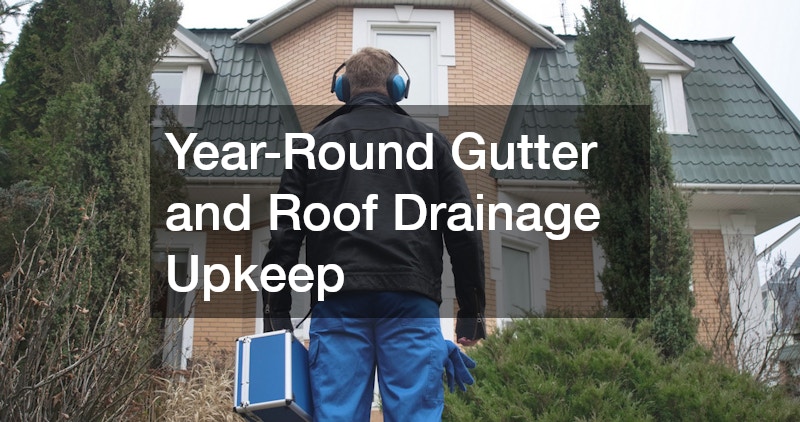
Water is one of the most destructive forces a home faces, and gutters are the first line of defense against it. Clogged gutters send water cascading down siding, pooling near foundations, and seeping into basements, which can lead to structural damage that costs far more to fix than routine cleaning ever would. Scheduling gutter services at least twice a year, in late spring and late fall, keeps debris from building up during the seasons when leaves and pollen are heaviest. Well-maintained gutters also protect landscaping below by directing water away from garden beds and walkways instead of letting it erode them.
- Clear leaves and debris after major fall leaf drop
- Check for sagging sections or loose brackets
- Ensure downspouts direct water at least three feet from the foundation
- Look for water stains on siding, a sign of overflow
- Install gutter guards if your property has heavy tree coverage
Exterior Wall and Stucco Surface Inspection
Exterior walls take a beating from sun, rain, and temperature swings all year, and stucco surfaces in particular are prone to hairline cracks that seem minor but let moisture creep in behind the surface. Once water gets trapped behind stucco, it can cause rot, mold, and structural damage that isn’t visible until the problem is severe. Scheduling stucco repair as soon as small cracks appear is far less expensive than addressing widespread water damage after it spreads behind the wall.
When you inspect, look for specific warning signs: cracks wider than 1/16 inch, dark staining or streaking that suggests water infiltration, soft or spongy spots when pressed gently, and areas where the stucco sounds hollow when tapped. Bubbling or peeling paint near the base of walls often signals trapped moisture as well. Pay close attention to spots around windows, doors, and where different building materials meet, since these transition points are especially vulnerable to gaps and cracking.
A simple visual inspection twice a year, ideally in spring and fall, and again after any major storm, can catch these issues while they’re still a quick and affordable fix. Minor hairline cracks can often be sealed with an elastomeric caulk for under $20, while ignoring them can eventually lead to repair bills running into the thousands once framing or insulation is compromised. Keep a written log or take photos each time you inspect, so you can track whether a crack is stable or spreading over time.
Walk the full perimeter of your home twice a year, checking walls from top to bottom for cracks, gaps, or soft spots. Pay close attention to areas around windows, doors, and where different building materials meet, since these transition points are especially vulnerable to cracking as materials expand and contract with temperature swings.
Hairline cracks under 1/16 inch are usually cosmetic, but anything wider or that runs diagonally from a window corner may signal settling or structural movement that warrants a professional look. Discoloration, bubbling, or a hollow sound when tapped are all signs that repair should happen sooner rather than later, since these often indicate trapped moisture working its way behind the surface.
Don’t overlook caulking around window frames and door trim, since gaps as small as 1/8 inch can let water seep in and cause rot in the wood beneath. If you have stucco, tap gently with the back of a screwdriver handle in several spots; a dull, hollow thud instead of a solid knock usually means the material has separated from the wall behind it.
Catching these issues early, before winter freeze-thaw cycles or heavy spring rains, can mean the difference between a $200 patch job and a $5,000 wall repair.
Sump Pump and Basement Moisture Control
Basements and crawl spaces rely heavily on sump pumps to stay dry, and this is one system you really don’t want to discover is broken during a heavy storm. Testing the pump by pouring water into the pit and watching it activate should be a routine part of your seasonal checklist, ideally before spring rains and again before winter thaw. Scheduling pump repairs at the first sign of unusual noise, slow cycling, or failure to activate protects your basement from the kind of water damage that quickly turns into thousands of dollars in cleanup and mold remediation. A battery backup system is also worth considering for homes in areas prone to power outages during storms.
- Test the pump quarterly by pouring water into the sump pit
- Clean the intake screen to prevent clogs from debris
- Check the discharge line for proper drainage away from the home
- Confirm the backup battery holds a charge if one is installed
- Listen for grinding or rattling that signals motor wear
Staying ahead of these seasonal tasks doesn’t require a professional-level understanding of every system in your home, just a willingness to check, test, and address small issues before they grow. Start with whichever season is closest on the calendar and work through the relevant checklist this weekend rather than waiting for a breakdown to force your hand. The homeowners who save the most money are rarely the ones who never need repairs, they’re the ones who catch problems early and act on them quickly.
About the Author