
Professional excavators manage site clearing, ground movement, precision earthworks, and structural preparation to lay the absolute structural foundation for successful construction projects. Hiring an experienced crew ensures the physical foundation of your project is structurally sound, level, and tailored to exact project blueprints. Earthmoving involves significantly more than simply scooping soil from the ground; it requires calculated site planning, accurate spatial measurements, depth calculations, and strict safety adherence.
Engaging a certified excavation service provides valuable peace of mind through every critical stage of early construction. Qualified operators utilize specialized, calibrated machinery to dig foundations, clear dense vegetation, build access roads, cut slopes, and trench for essential underground utilities.
Skimping on proper ground preparation often causes long-term structural settling, shifting, or severe drainage failures. A professional team guarantees that the physical site matches engineering specifications before vertical construction ever begins.
What Are the Essential Steps Included in the Excavation Process?
The excavation process involves systematic site preparation, precision trenching, professional grading, soil compaction, and ongoing site debris removal. Professional crews do not simply show up with heavy machinery and start digging without an operational roadmap. Instead, they execute a phased, deliberate approach designed to maintain structural stability, reduce site risks, and keep construction schedules moving efficiently forward.
-
Initial Site Clearing and Demolition: Clearing dense trees, large boulders, heavy brush, and old concrete structures to leave a completely workable blank canvas.
-
Precision Trenching and Foundation Digging: Digging focused, highly stable channels intended for structural footings, plumbing networks, or complex electrical conduits.
-
Grading and Soil Compaction: Leveling uneven terrain and applying mechanical compaction so the underlying subgrade safely supports heavy building loads over time.
-
Debris Removal and Backfilling: Hauling away excess earth while repurposing suitable materials to fill back around new foundations securely and evenly.
How Do Professionals Ensure Safety During Heavy Earthmoving?
Professional contractors protect crew members, neighboring properties, and underground utility lines by implementing daily structural inspections, detailed soil classifications, protective trench systems, and localized utility mapping. Earthmoving is inherently hazardous work, with risks ranging from sudden trench cave-ins to accidental utility line strikes. Professional contractors take extensive precautions and follow formal safety checklists to control those risks on every active job site.
Contractors must comply with federal protocols, such as OSHA Excavation Safety Standards, which mandate protective systems like sloping, benching, shoring, or trench shields for excavations five feet deep or more. Additionally, operators perform thorough soil classification checks to evaluate cohesive strength and prevent unexpected soil collapses during work. Prior to breaking ground, professionals work alongside local locator services to carefully map out water, electrical, gas, and telecommunication lines, preventing dangerous cutoffs, explosions, or costly structural damages.
What Types of Machinery Do Excavation Specialists Utilize?
Excavation specialists rely on a powerful fleet of specialized heavy machinery, including hydraulic excavators, bulldozers, backhoes, skid steers, and mini-excavators selected specifically for job-site demands. Selecting the correct machinery keeps projects strictly on timeline and avoids unnecessary damage to surrounding soil ecosystems, paved areas, or nearby existing property infrastructure.
-
Heavy Hydraulic Excavators: Multi-ton tracked machines built for deep trenching, large-scale basement digs, heavy lifting, and major structural demolition work.
-
Bulldozers and Crawlers: High-powered earthmovers engineered to strip surface vegetation, push massive soil loads, create slopes, and perform rough grading.
-
Mini-Excavators & Skid Steers: Agile, compact equipment designed to navigate tight residential backyards, dig small utility lines, and execute fine landscape grading.
-
Dump Trucks & Compaction Equipment: Heavy transport vehicles paired with smooth drum or padfoot rollers to compact subbases and transport excess spoil off-site.
How Does Soil Analysis and Geotechnical Surveying Direct Excavation Work?
Before any heavy machinery touches a construction site, professional excavators often review geotechnical report findings to understand the exact composition and load-bearing capacity of the soil. Soil type dictates everything from the specific digging techniques required to the type of heavy equipment that must be mobilized for the project.
Clays, sands, gravels, and silt each react differently to moisture, mechanical pressure, and structural loads. For instance, highly expansive clay soils expand significantly when wet and contract when dry, requiring specialized soil stabilization or complete replacement with engineered structural fill before pouring concrete. Professionals cross-reference soil tests with engineering requirements established by organizations like the American Society of Civil Engineers (ASCE) to ensure the ground beneath a structure will not shift unexpectedly over time.
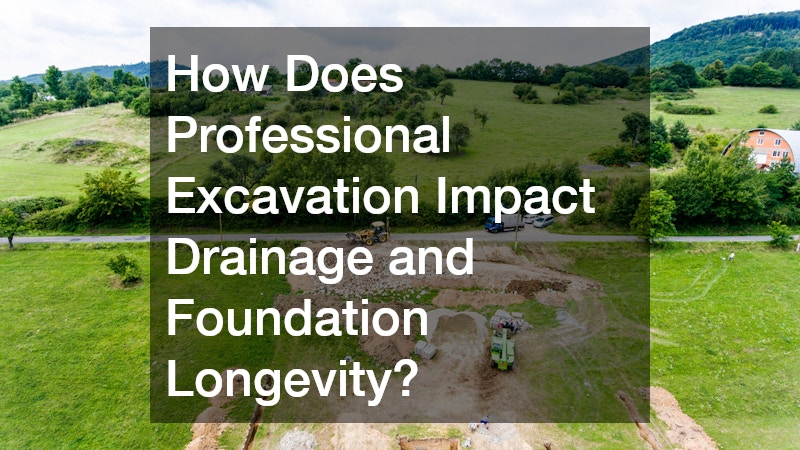
How Does Professional Excavation Impact Drainage and Foundation Longevity?
Professional earthmoving guarantees long-term foundation strength by managing site elevation, directing rainwater runoff away from structures, and preventing active soil erosion. Poor ground preparation is one of the leading causes of cracked foundations, settling, and flooded basements years down the line. Improper slope angles allow standing water to collect around footings, leading to high hydrostatic pressure against subterranean foundation walls.
By contracting a reliable excavation service, property owners ensure that micro-grading and proactive water mitigation are fully integrated into initial ground preparation. Skilled operators shape final ground slopes to gently move surface runoff away from the structure’s perimeter. They also assess water tables and install gravel subbases or sub-drainage systems to allow subterranean water to drain naturally without ever compromising the structural integrity of the build.
Understanding what to expect from professional earthmoving services helps project owners, developers, and homeowners make well-informed decisions from the very start of a build. From rigorous safety compliance and utility mapping to accurate soil grading, geotechnical planning, and specialized machinery deployment, professional earthmoving is an irreplaceable phase of any durable building effort. Working with qualified contractors ensures your site is safer, fully compliant with structural regulations, properly drained, and built on a foundation designed to withstand the tests of time, heavy loads, and adverse weather.
About the Author