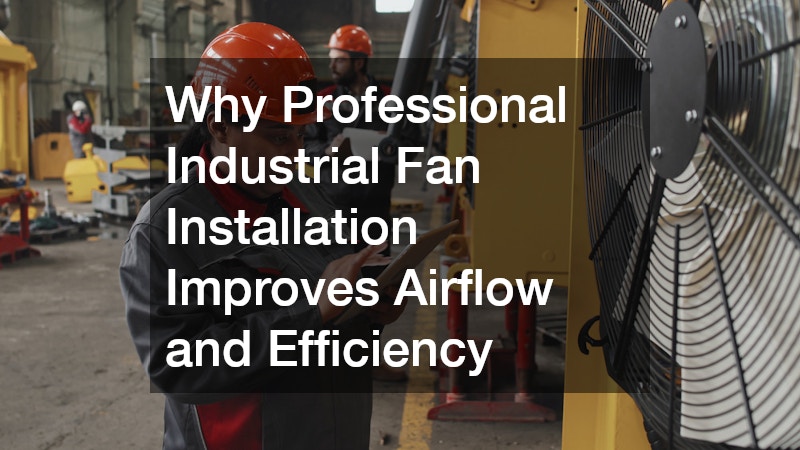
Industrial fan installation is a critical step for businesses that need better airflow, temperature control, and safer working conditions. Warehouses, factories, workshops, and large commercial spaces all rely on proper ventilation to stay productive and compliant with safety standards. When industrial fan installation is done correctly, it helps move large volumes of air, reduce heat buildup, and improve overall air quality for employees and equipment.
What Is Industrial Fan Installation?
Industrial fan installation involves setting up heavy-duty fans designed for large spaces. These fans are much bigger and more powerful than standard residential or office fans.
Types of Industrial Fans
Industrial fans come in many forms, including ceiling-mounted fans, wall-mounted fans, floor fans, and exhaust fans. Each type serves a different purpose depending on the layout and airflow needs of the building.
Why Installation Matters
Even the best fan will not perform well if it is installed incorrectly. Proper industrial fan installation ensures the fan moves air efficiently, safely, and consistently throughout the space.
Benefits of Proper Industrial Fan Installation
Installing industrial fans the right way offers more than just cooler air.
Improved Airflow
Large spaces often suffer from stagnant air. Industrial fan installation helps keep air moving, reducing hot spots and improving comfort across the entire facility.
Better Worker Comfort
High temperatures and poor ventilation can make employees uncomfortable and tired. Industrial fan installation helps create a more pleasant work environment, which can boost morale and productivity.
Enhanced Safety
Heat, fumes, dust, and moisture can create dangerous conditions. Proper fan installation helps remove harmful air and reduce risks related to overheating or poor air quality.
Planning an Industrial Fan Installation
Good planning is key before installing any industrial fan system.
Evaluate the Space
Every building is different. Ceiling height, square footage, machinery placement, and existing ventilation all affect how industrial fan installation should be handled.
Determine Airflow Needs
Airflow requirements depend on how the space is used. A warehouse storing goods may need different airflow than a manufacturing plant with active machinery.
Choose the Right Fan Size
Fan size and power matter. Oversized fans can waste energy, while undersized fans may not move enough air. Proper sizing is an important part of industrial fan installation.
Common Locations for Industrial Fan Installation
Industrial fans are used in many different settings.
Warehouses
Warehouses often have high ceilings and large open areas. Industrial fan installation helps circulate air evenly and reduce heat buildup near the ceiling.
Manufacturing Facilities
Factories generate heat, fumes, and dust. Fans help remove contaminated air and bring in fresher air to protect workers.
Agricultural Buildings
Barns and processing facilities rely on fans to control temperature, moisture, and odors. Proper installation helps protect animals, products, and equipment.
Commercial Garages and Workshops
Vehicle exhaust and heat can quickly fill enclosed spaces. Industrial fan installation helps improve ventilation and safety.
Wall-Mounted vs Ceiling Fan Installation
Different installations serve different purposes.
Wall-Mounted Industrial Fans
Wall-mounted fans direct airflow across work areas. They are useful when ceiling space is limited or when focused airflow is needed.
Ceiling-Mounted Industrial Fans
Ceiling fans are ideal for large, open spaces. High-volume, low-speed fans move air gently but effectively across wide areas.
Safety Considerations During Installation
Safety should always be a top priority.
Electrical Requirements
Industrial fans require proper electrical connections. Industrial fan installation should always follow local codes and manufacturer guidelines.
Secure Mounting
Fans must be securely mounted to prevent vibration or movement. Poor mounting can lead to noise, damage, or safety hazards.
Clearance and Placement
Fans need enough clearance from walls, machinery, and people. Proper spacing ensures safe operation and better airflow.
Professional vs DIY Industrial Fan Installation
Some businesses consider installing fans themselves, but professional installation often offers better results.
Benefits of Professional Installation
Professionals understand airflow design, load requirements, and safety standards. Professional industrial fan installation reduces the risk of mistakes and ensures optimal performance.
Avoiding Costly Errors
Incorrect installation can lead to poor airflow, higher energy costs, or damaged equipment. Hiring experts helps avoid these problems.
Maintenance After Industrial Fan Installation
Installation is only the beginning. Ongoing care keeps fans running efficiently.
Regular Inspections
Checking bolts, mounts, and electrical connections helps prevent issues before they become serious.
Cleaning and Lubrication
Dust and debris can affect performance. Cleaning blades and lubricating moving parts keeps fans operating smoothly.
Performance Checks
Over time, airflow needs may change. Periodic evaluations ensure the fan system still meets facility requirements.
Energy Efficiency and Cost Savings
Industrial fans can help reduce overall energy costs.
Reducing HVAC Strain
By improving air circulation, industrial fans reduce the workload on heating and cooling systems.
Lower Utility Bills
Efficient airflow helps maintain comfortable temperatures with less energy use, saving money in the long run.
Final Thoughts on Industrial Fan Installation
Industrial fan installation is an essential investment for any large workspace that values comfort, safety, and efficiency. When done properly, industrial fan installation improves airflow, protects workers, and supports smoother daily operations. From planning and placement to professional installation and maintenance, taking the right approach ensures your industrial fan system delivers reliable performance for years to come.
About the Author